Grief and Graying
Nearly two years ago, I made the decision to grow out my gray. I’m a brunette (or, identify as a brunette), but, over the last decade, the grays have been creeping in. My gray pattern is like my late grandmother Adeline’s—gray business on top, brunette party on the bottom. It sounds interesting until it is happening on your own head. As the gray-white creeps in at the roots and slowly takes over from my crown, creeping downward, it looks like I’m balding.
Late summer 2020, when everyone’s hair was doing whatever it felt like during quarantine, I had been growing out my gray and thought I was ready to embrace “the sparkles.” But two weeks after Daryl died, facing a new life as a widow, I quickly dyed my hair back to brunette.
Internally, I felt 100 years old, I just couldn’t face the world seeing me that way.
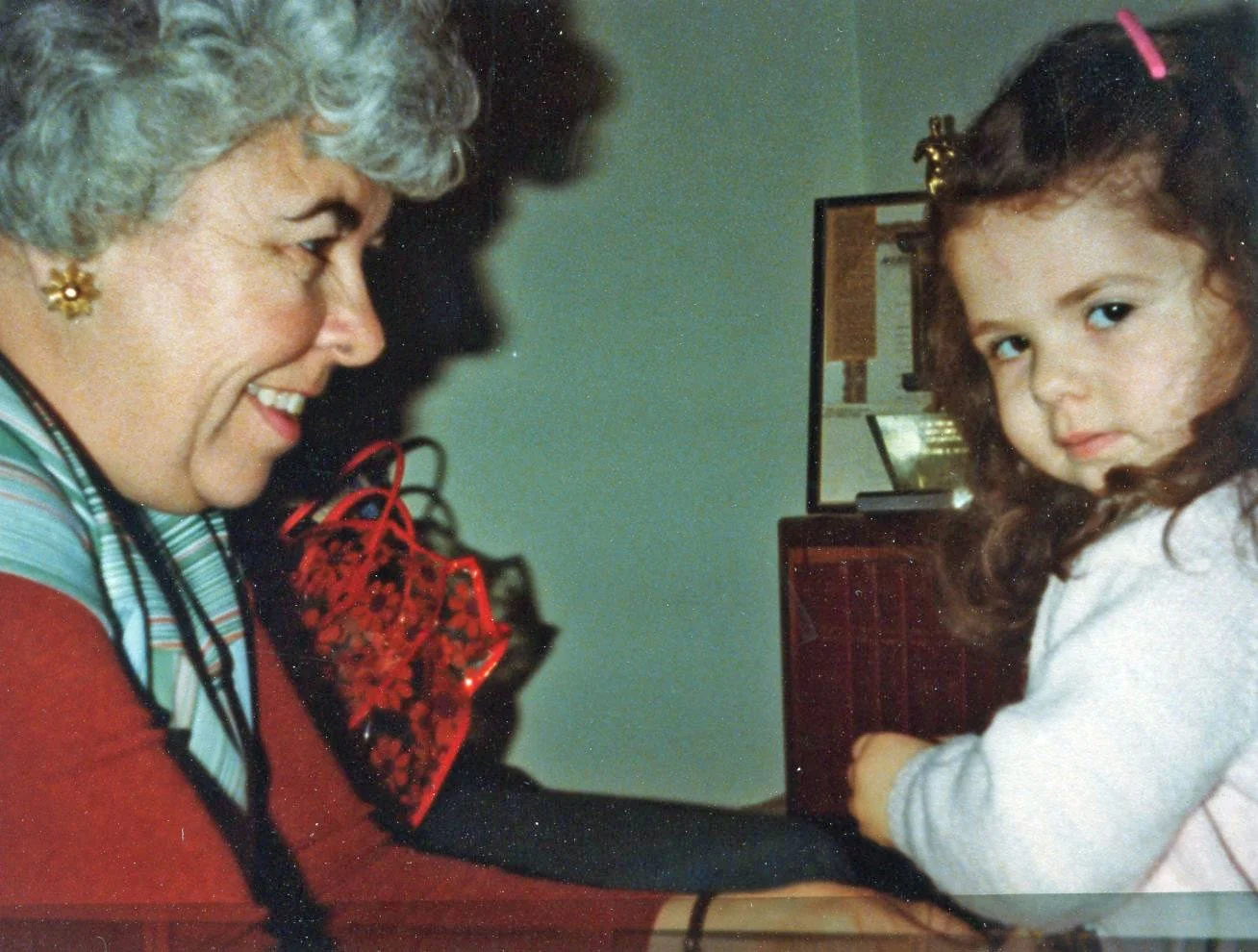
My grandma, Adeline (53) and me (3?).
Flash forward a few years, and I felt ready to grow out the gray. My brilliant and ever-supportive hair stylist explained how long it would take to do this naturally; they blended in the grays so it was more of an ashy blonde. For the first six months, I was into it, I was blonde! It was different. As the grays started taking over, per the plan, it became more ashy, less blonde. Sometimes, I’d catch myself in a mirror and not recognize myself. I felt at an in-between time in my life, so it kind of fit my mood.
Then, I turned 50. At first, it felt easy, I didn’t stress about it and my best friend and I planned a joint birthday party. But then I had a fateful encounter at Ross Dress for Less. Checking out, the Gen Z cashier whose own hair was about 3 different colors, smiled and said, “Would you like the senior citizen discount?”
I was shocked. “I hope not!” I said taken aback.
Flustered by my reaction, she tried to make it better (?) “The senior discount begins at 55.” This did not help, only added fuel to the utter disbelief that was raging through my brain—I looked old.
The man behind me shouted, “Hey, can I get that discount?”
Post-Ross identity crisis, I decided to cover the ashy grays and go blonde. I had been so sure I was ready to embrace the gray, save money on salon bills, tell the patriarchy to take a hike, join the legions of the silver foxes, and embrace this peri-menopause life! Unfortunately, vanity is kind of a bossy bitch and does not age gracefully
Also, with blonde/gray hair I was starting to look more like my mom. It’s not that I mind looking like my mom, we always looked alike, but there was something about looking like her when she died that scared me. I was caught wanting to stay in a time capsule, to be a brunette wife and daughter, to not age in image, but only in my heart..
The truth of getting older is that our feelings about it shift daily. One day, you’re fine being whatever age you are, the next day you’re sitting on a heating pad drinking coffee, liking a photo of a friend’s college-age child and feeling like a time-traveling Marty McFly.
I wanted to age, but not look old. I wanted to tell people I was 50 and have them exclaim, “No, I don’t believe it!” I wanted my silvery-gray hair to look like the cool hipster girls who dye theirs gray. Instead, I looked like every other Gen X woman with graying hair.
There are a lot of different religious and cultural beliefs around hair and meaning. Nuns cover their hair with habits, Buddhist monks shave their heads, for the Rastafari dreadlocks are sacred. In my case it had to do with feeling like me. All I have left of Daryl and my mom are photos and in those photos and memories, I’m a brunette. What would they think of me as a blonde, would they even recognize me?
When Daryl was going through chemo, the drug he was on meant that eventually, he would lose his hair, which meant his illness would be visible. While we were very open about his cancer diagnosis, there was something about it marking his body that made it very real. In the end, he moved to a clinical trial drug before his hair was gone, but it was thinning and so was he. What cancer patients go through is one experience, what their caregivers go through is another. Watching your husband start to disappear in front of you, to morph, is terrifying. When he was first admitted to the hospital in Florida after his diagnosis, high on painkillers and sleeping, I suddenly saw a flash of his father, 40 years older than him.
The hard truth is, when you lose someone, they are forever captured in amber at that age. So, Daryl will always be vibrant and 40, and I am speeding past him into a creaky and cranky woman he might not recognize.
When Daryl died, I was 45 and considered a “young widow.” There were widow groups only for “young widows” and others only for those older than 45. Grief is ageless, timeless. I can tell you with absolute confidence that death does not care about your age. So, why did these grief groups set an age limit? Intellectually, I understood, but emotionally, I felt left out. My mom was only 67 when she died, and I miss how we could share insights and gripes on aging, having someone to mother me even a little bit.
I was a brunette my whole life, who was I if I wasn’t one now? There were so many moments when I was blonde that friends who have known me for years did not immediately recognize me. I did not like that feeling at all.
What I’ve discovered is not profound—I’ve always been an old soul, I just don’t want to look like one. I’m not proud of ditching the gray, with my estrogen dropping and being over 40, I’m becoming invisible to people (i.e. men) in many ways, but there’s something about my hair, about feeling like myself when I look in the mirror that I needed and could claw back even if for only a little while.